What the Building Chooses to Say
Personal Walk-Through: Jawahar Kala Kendra, Jaipur

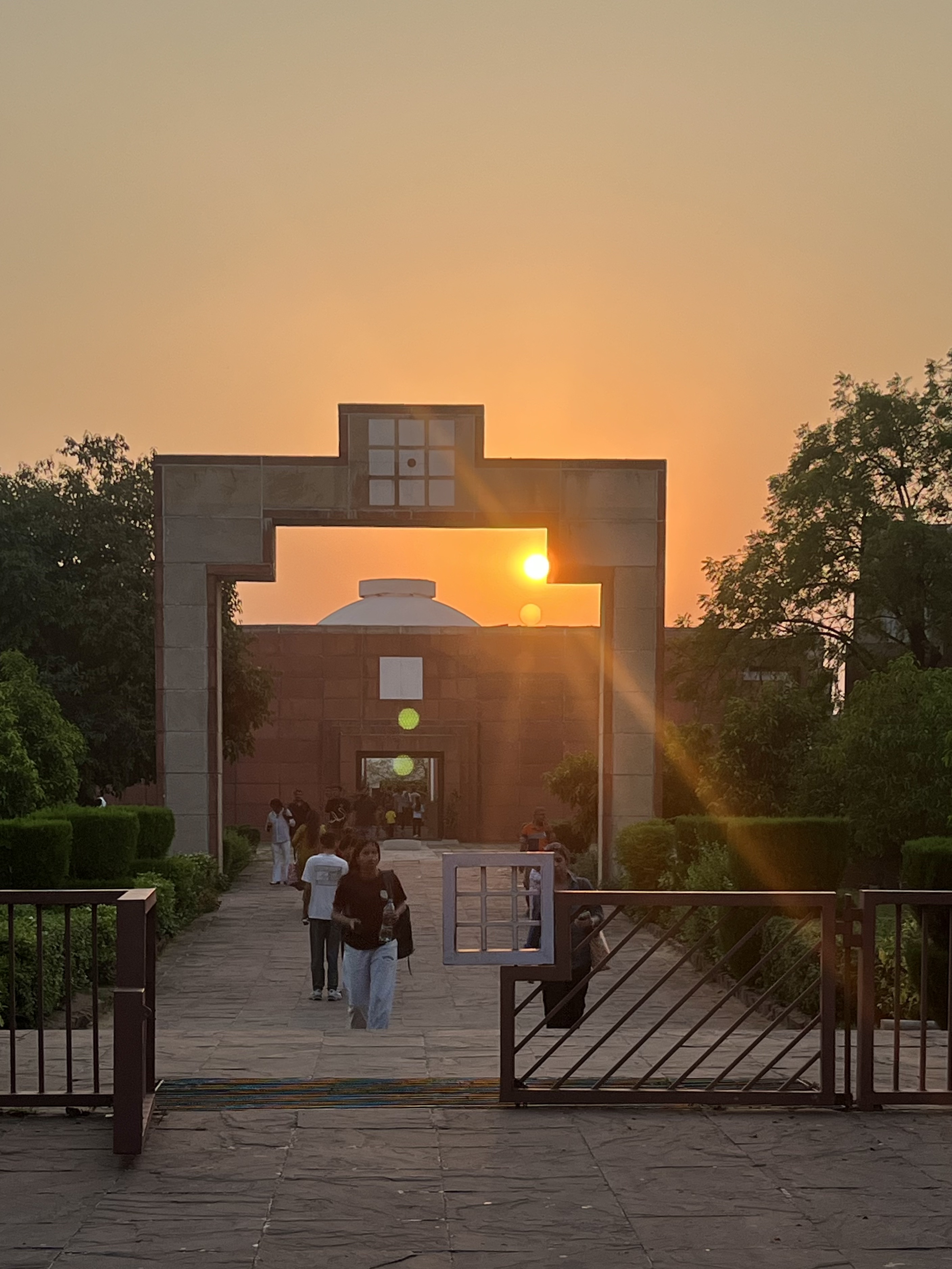
The Torana: An Arrival That Prepares You
Before the building reveals itself, it frames you. Entry to Jawahar Kala Kendra is through a well-proportioned torana — a gateway whose dimensions feel neither imposing nor incidental, but exactly right. It sets a register. Walking beneath it, the view ahead quietly resembles a Buddhist stupa in its massing and calm authority. The impression is immediate and unmistakable: this is not simply a doorway into a building. It is a threshold into an architectural monument.
The architecture does not rush you past this moment. It holds it — allowing the transition from the ordinary street into something more considered to settle into the body before the building makes any further demands.
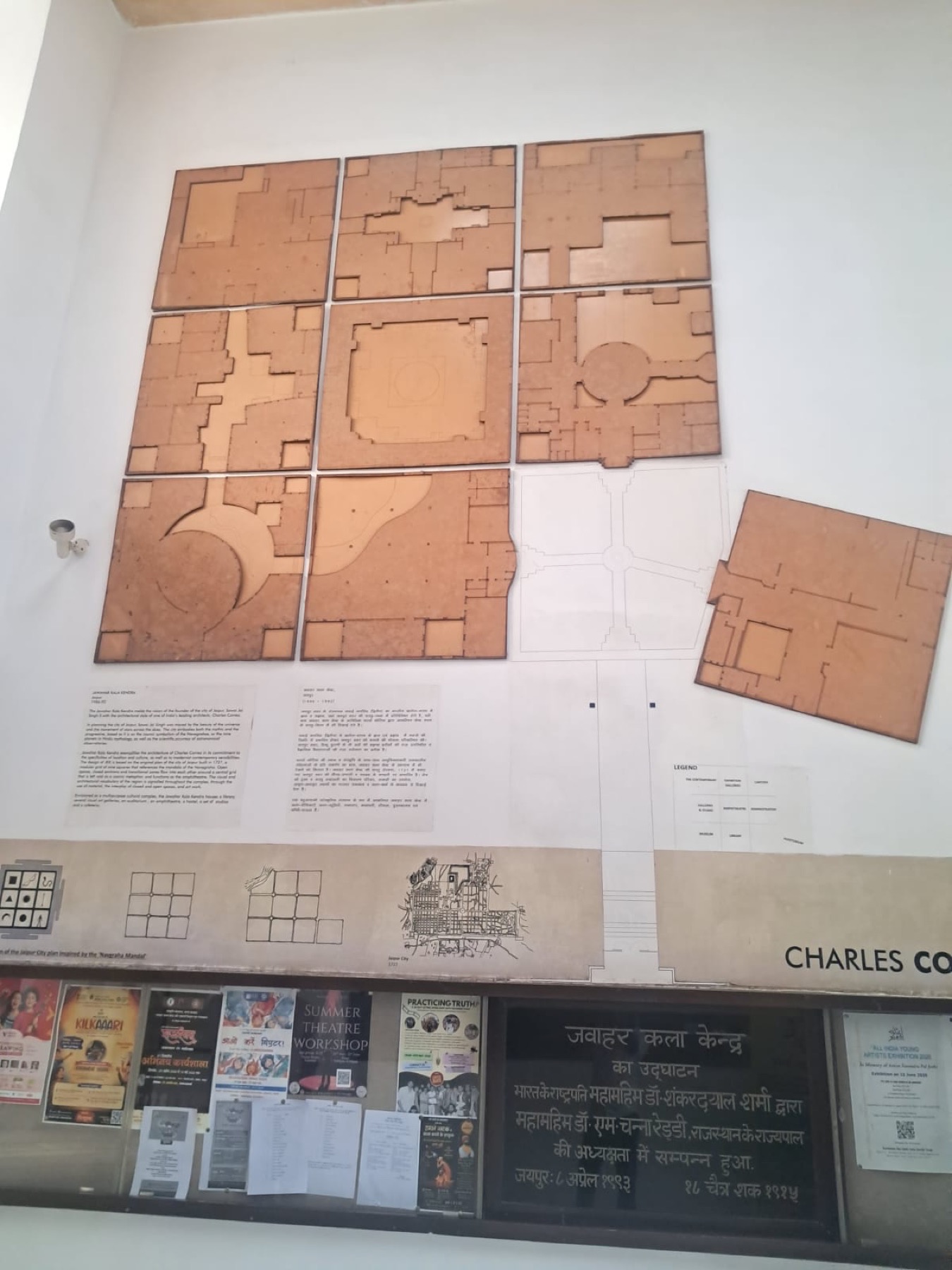
The Building Introduces Itself
Getting into the actual building, the first spaces encountered are not spaces of function — they are spaces of introduction. The building seems to want to explain itself before asking you to use it. There is something generous and unhurried in this: a sense that the architecture is willing to be known, to offer context, to say — here is what I am, and why.
Central to this sequence are beautiful domes, located at the heart of the complex and connected to each other through proximate galleries. They anchor the space without dominating it. And standing beneath them, looking upward, fresco paintings come into view on the interior surfaces — depicting astronomy, Vastu theory, the ancient systems by which this building understands the world. The ceiling does not merely close the room. It completes the argument.
The building seemed to want to introduce itself — as if it wished to be understood before it was used. There is something generous and unhurried in this: a sense that the architecture is willing to be known, to offer context, to say — here is what I am, and why.
The Central Court: Grandeur and Exposure
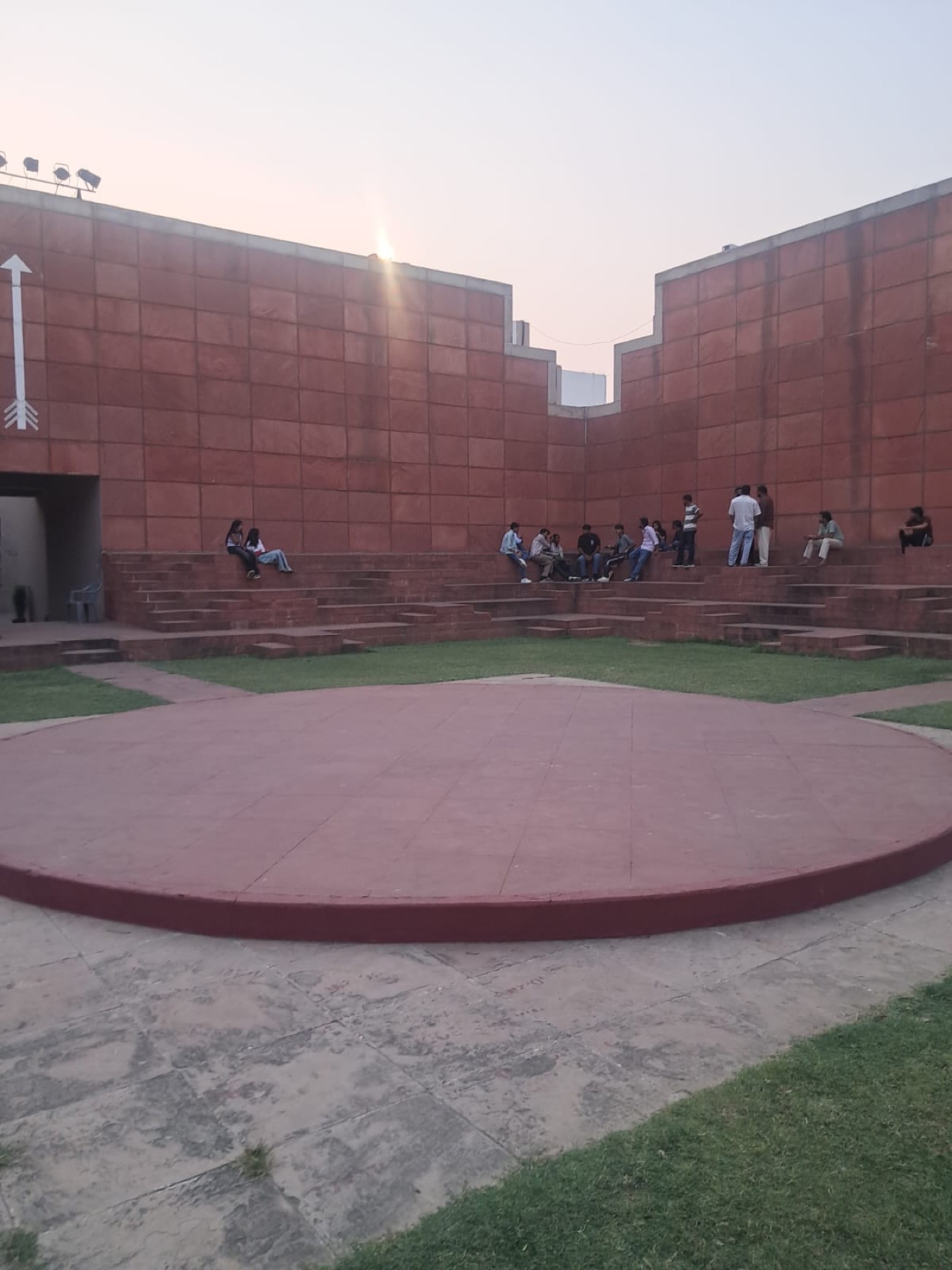
Moving into the central area, the space opens into an amphitheatre. The resemblance to a Rajasthani stepwell is striking — the same terraced geometry, the same sense of descending into something both open and contained, the same quality of royal dignity held within stone. There is a particular feeling here that is difficult to name precisely: a sense of being exposed within quiet grandeur. The sky above, the stone around, and the knowledge that you are at the centre of something carefully considered.
It is a space that earns presence without demanding it.
The Workspace: A Street of Purpose
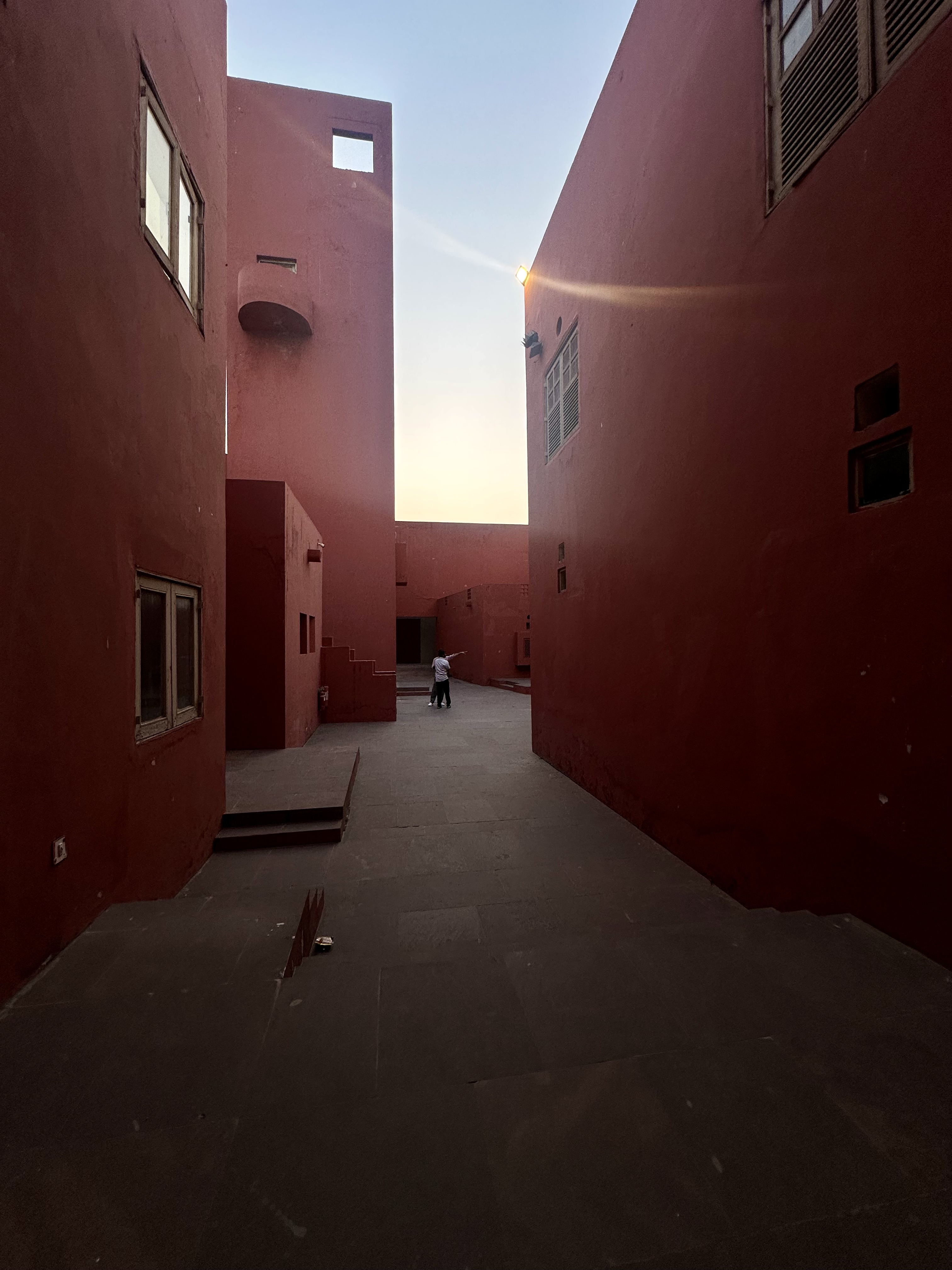
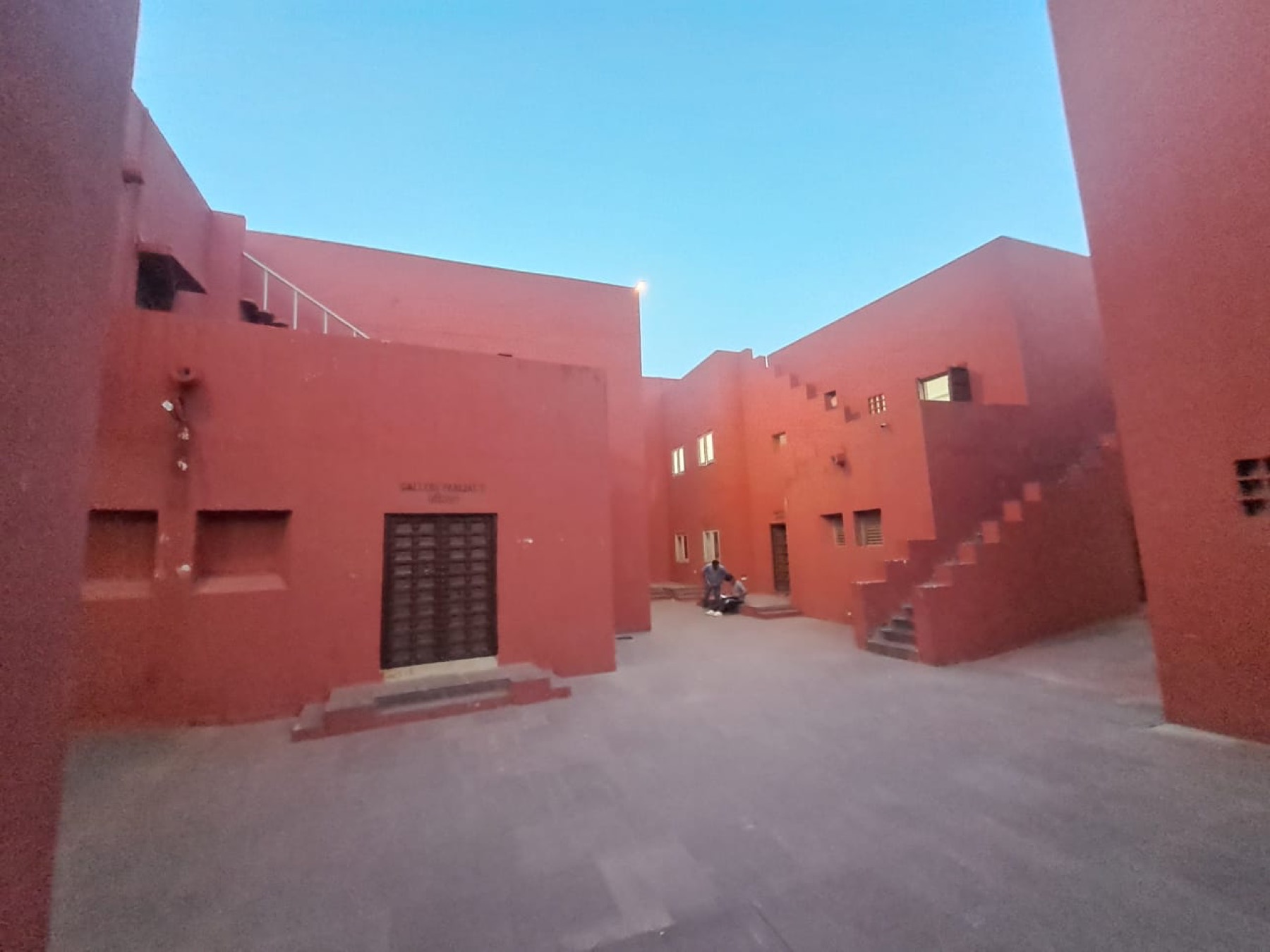
The workshop area announces itself differently. Moving into it, the atmosphere shifts — the vibe here is intense and responsible. This is a space that takes itself seriously, and communicates that seriousness to those inside it.
What produces this feeling, spatially, is the variation in proportion across the zone. The workspace is not a single uniform hall — it is designed with different scales, different compressions and releases, so that moving through it feels like walking a busy town street where each stretch has its own character and claim. The building refuses to make labour comfortable in a passive sense. It keeps you engaged, keeps you present, keeps you aware that something is expected of you here.
The Canteen: Care, Cycles, and Different Moons
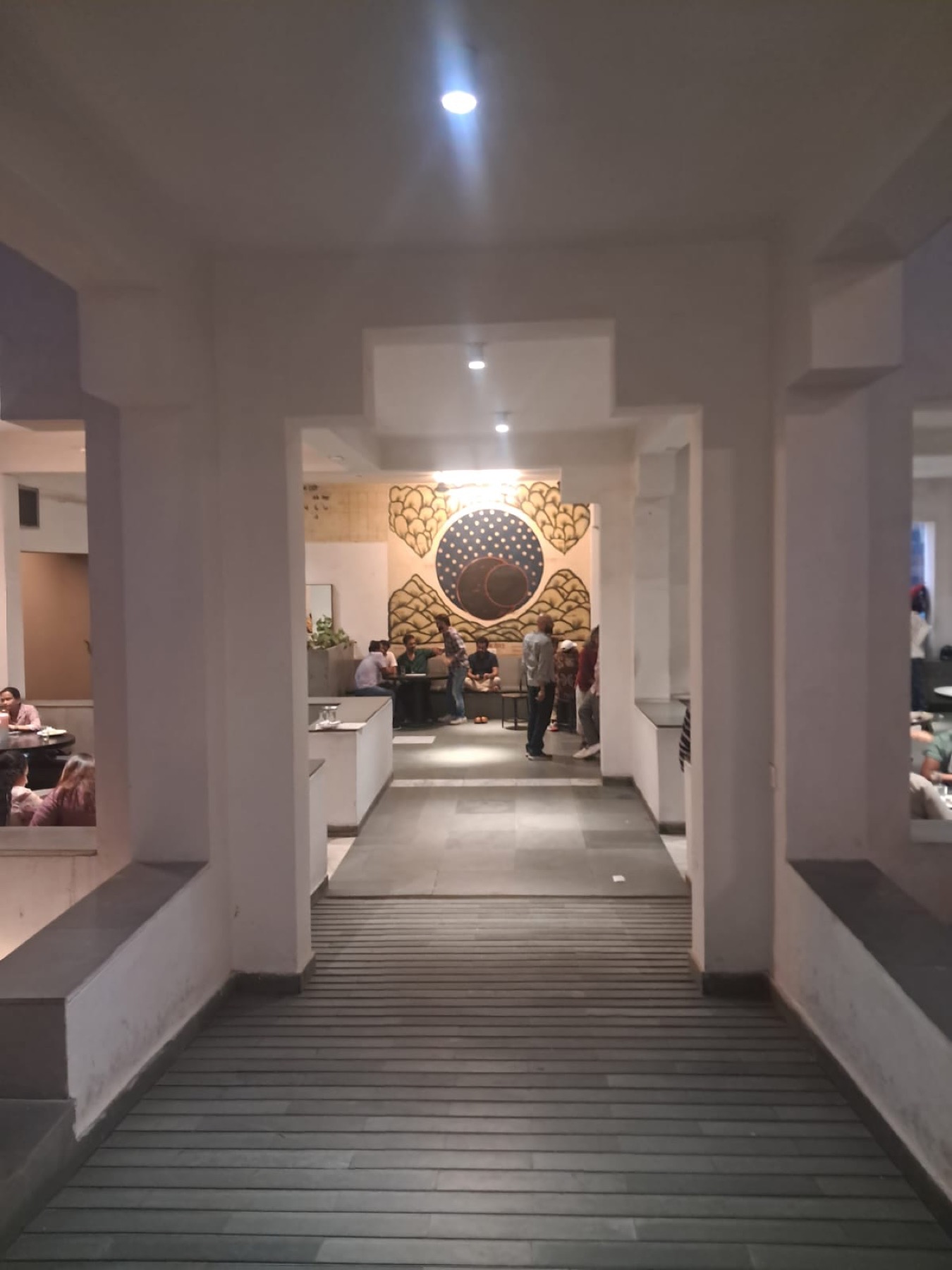
After the intensity of the workshop, the canteen arrives as a relief — but a thoughtful one. The feeling here is caring and nurturing, a quality that suits the space functionally and extends beyond it. This is a space that looks after you.
On its surfaces, the moon is depicted across its different phases — waxing, full, waning, dark. The observation this imagery invites is a quiet and humane one: that the people who gather here are not all in the same place. Different phases, different states of mind, different moments in their own cycles. The canteen, in its imagery, acknowledges this without making a fuss of it. It simply makes room for every phase, and in doing so, earns a warmth that goes beyond food and rest.
A Building That Held Its Sequence
What Jawahar Kala Kendra leaves behind, after the walk is over, is not a single strong image but a sequence of distinct feelings — each room having offered something different, each transition having been deliberate. Reverence at the threshold. Wonder beneath the dome. Exposure in the amphitheatre. Seriousness in the workshop. Care at the table.
The building knew what it was doing at every step. And it made sure, quietly and without fanfare, that you felt it too.